
When Feeding Becomes Dangerous in a Baby’s First Days of Life: How Newborn Screening Can Help Detect Disease Early

Every time a newborn drinks milk, the body immediately begins an extraordinary series of chemical reactions. Proteins are broken down into amino acids, fats are converted into energy, and sugars are transported to fuel rapidly growing organs like the brain and heart. Although feeding may seem like a simple daily routine, it depends on thousands […]
SMA Awareness Month 2026: Understanding Spinal Muscular Atrophy and the Power of Early Genetic Screening

What is Spinal Muscular Atrophy? Spinal Muscular Atrophy (SMA) is a genetic condition that causes muscles to weaken and waste away (atrophy). It affects roughly 1 in 10,000 newborns causing “floppy babies”, and about 1 in 50 people are asymptomatic carriers of the genetic mutation. In a healthy body, motor neurons which are specialized nerve […]
A Genetic Answer for a Rare Disease: Southeast Asian Ovalocytosis Case from Indonesia
For many families affected by rare diseases, obtaining a clear diagnosis can become a long and challenging journey. Patients may undergo multiple laboratory tests, specialist consultations, and hospital visits over several months or even years without finding a definitive answer. This uncertainty not only creates emotional stress for families, but can also make clinical management […]
A Genetic Answer for a Rare Disease: Tuberous Sclerosis Complex Case from Indonesia
For many families living with rare diseases, the journey to diagnosis can be long, emotionally exhausting, and filled with uncertainty. Patients may visit multiple specialists, undergo repeated medical examinations, and still struggle to obtain a clear explanation for their symptoms. In many cases, the absence of a definitive diagnosis can delay appropriate treatment and increase […]
Haemophilia: When a Small Cut Won’t Stop Bleeding
Imagine a small papercut that refuses to stop bleeding, or a bruise that appears for no reason at all. For most of us, blood clotting is an invisible shield, a rapid-response team that patches up our injuries without a second thought. But for those with Haemophilia, that shield is missing a vital part of its […]
The Body’s Hidden Clock: Is Your Biological Age Older Than Your Birthday?
We might know someone who is 60 but hiked a mountain last weekend, and someone else who is 30 but feels “old” and exhausted every morning. We might think it’s just a different lifestyle, but we can actually measure a different type of age that does not always represent our actual age.
[WORLD DOWN SYNDROME DAY] Smart Pregnancy Planning: Detecting Down Syndrome Before and During Pregnancy
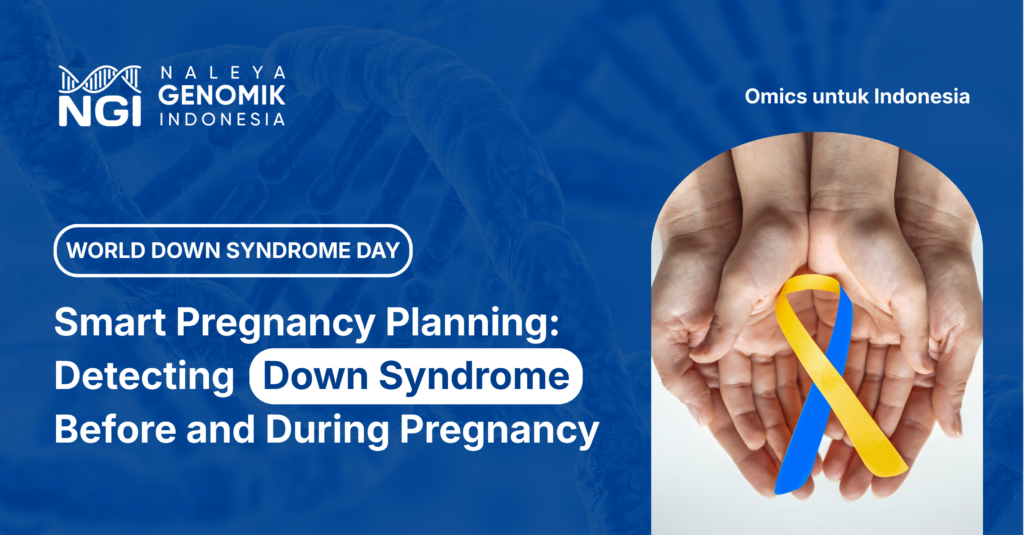
Every year on World Down Syndrome Day, we are reminded of the importance of awareness, understanding, and early support for individuals born with this genetic condition. Down syndrome, also known as Trisomy 21, occurs when a baby has an extra copy of chromosome 21. Normally, a baby inherits 46 chromosomes, 23 from each parent. Think […]
The Evolving Landscape of Renal Cell Carcinoma: A Clinical Overview for World Kidney Day
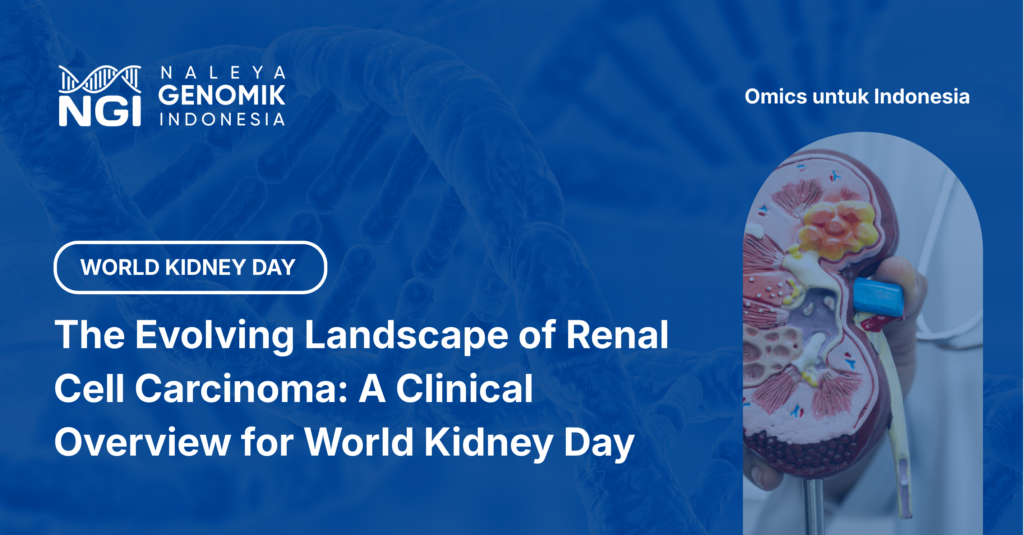
Have you ever thought about what the two bean-shaped organs in your lower back do? Those are your kidneys. They play a vital role in keeping your body healthy by filtering about half a cup of blood every minute. They remove waste and extra water to produce urine while also maintaining the balance of fluids […]
A Call to Action for International Rare Disease Day 2026
Advancing Equity Through Early Detection, Genomic Innovation, and Collective Action International Rare Disease Day 2026 serves as a critical reminder that rarity does not diminish impact. Although each rare disease affects a small number of individuals, collectively these conditions represent a major global health challenge requiring scientific commitment, policy prioritization, and equitable access to diagnostics […]
When “Clumsiness” is More: A Parent’s Guide to Understand Muscle Weakness in Children

Children’s Clumsiness or Trusting Your “Parental Instinct” Children often trip or fall during their process of learning to walk and which is totally normal since their balance and coordination skills are still in an early developmental stage. However, parents may notice that some children present several struggles for running, climbing stairs, getting up from the […]