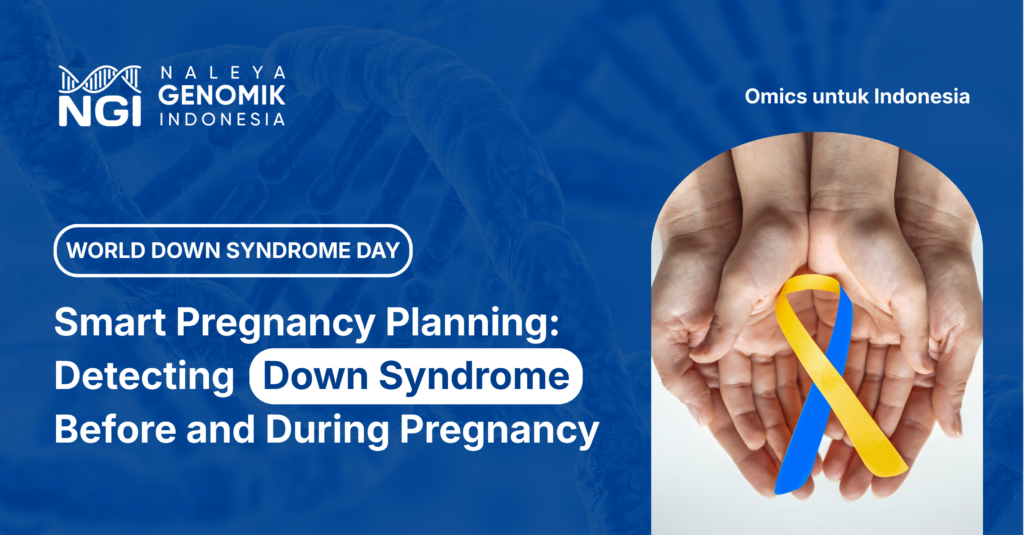
Every year on World Down Syndrome Day, we are reminded of the importance of awareness, understanding, and early support for individuals born with this genetic condition. Down syndrome, also known as Trisomy 21, occurs when a baby has an extra copy of chromosome 21. Normally, a baby inherits 46 chromosomes, 23 from each parent. Think of chromosomes as the “instruction manuals” for the body’s development. In Down syndrome, instead of the usual pair of chromosome 21, the baby has three.
How it Happens: A “Random Glitch”
In 95% of cases, Down syndrome is not inherited from the parents. It usually happens by chance during the very first moments of cell division. While it can happen to anyone, the risk increases as the mother’s age increases, particularly after age 35.
Life with Down Syndrome: What to Expect
A diagnosis of Down syndrome means a baby will face certain developmental and physical differences. While every child is an individual with their own personality, common effects include:
- Physical Features: A flattened face, eyes that slant upward, small ears, shorter height, smaller limbs.
- Health Considerations: Some Down syndrome babies are born with heart defects. Hearing loss, and breathing, and sleeping disorders are also several common problems.
- Developmental Milestones: Children often take longer to reach milestones like crawling, walking, and talking. They typically have mild to moderate intellectual disabilities but are capable of learning and leading fulfilling lives with the right early intervention such as motoric therapy, language therapy, and occupational therapy.
Preparing Early: Why Screening Matters
Since Down syndrome can affect a child’s health from day one (such as heart issues), knowing the diagnosis early allows parents to choose the right hospital, the right doctors, and the right early intervention teams.
1. PGT: Checking Before Pregnancy (For IVF Families)
Preimplantation Genetic Testing for Aneuploidy (PGT-A) is for families using In Vitro Fertilization (IVF).
How does it work?
Before an embryo is placed in the womb, a few cells are tested to see if the correct number of chromosomes is present, preventing implantation failure and miscarriage.
Why is it recommended?
It allows parents to select embryos that do not have Trisomy 21 or other chromosomal abnormalities, significantly reducing the chance of a Down syndrome pregnancy before it even begins.
2. NIPT: The Modern “Safety First” Screen (During Pregnancy)
Non-Invasive Prenatal Testing (NIPT) is a revolutionary blood test for pregnant women.
How does it work?
A simple blood draw from the mother can detect the baby’s DNA that floats freely.
Why is it recommended?
It is much more accurate (99% Accuracy) than older triple or quad trimester screening.
- Zero Risk: Unlike invasive tests (like amniocentesis), NIPT carries no risk of miscarriage.
- Early Answers: It can be done as early as 10 weeks into the pregnancy.
Every parent hopes to give their baby the healthiest possible start. With advanced genetic screening from Naleya Genomics Indonesia, you can gain early, accurate insights to support confident decision-making.
Whether you are planning pregnancy through IVF with PGT-A or seeking a safe, non-invasive screening during pregnancy with NIPT, our cutting-edge technology helps detect chromosomal conditions like Down syndrome as early as possible. Take the first step toward peace of mind, consult with our experts today and empower your journey to a healthier future for your family. Feel free to contact us for more information.
References:
- Antonarakis, Stylianos E., et al. “Down Syndrome.” Nature Reviews Disease Primers, vol. 6, no. 1, 6 Feb. 2020.
- Centers for Disease Control and Prevention (CDC). “Down Syndrome.” Birth Defects, CDC, 26 Dec. 2024. www.cdc.gov/birth-defects/about/down-syndrome.html.
- National Down Syndrome Society. “About down Syndrome.” Ndss.org, National Down Syndrome Society, 2024, ndss.org/about.
- “Early Intervention.” Ndss.org, 2024, ndss.org/resources/early-intervention.
